
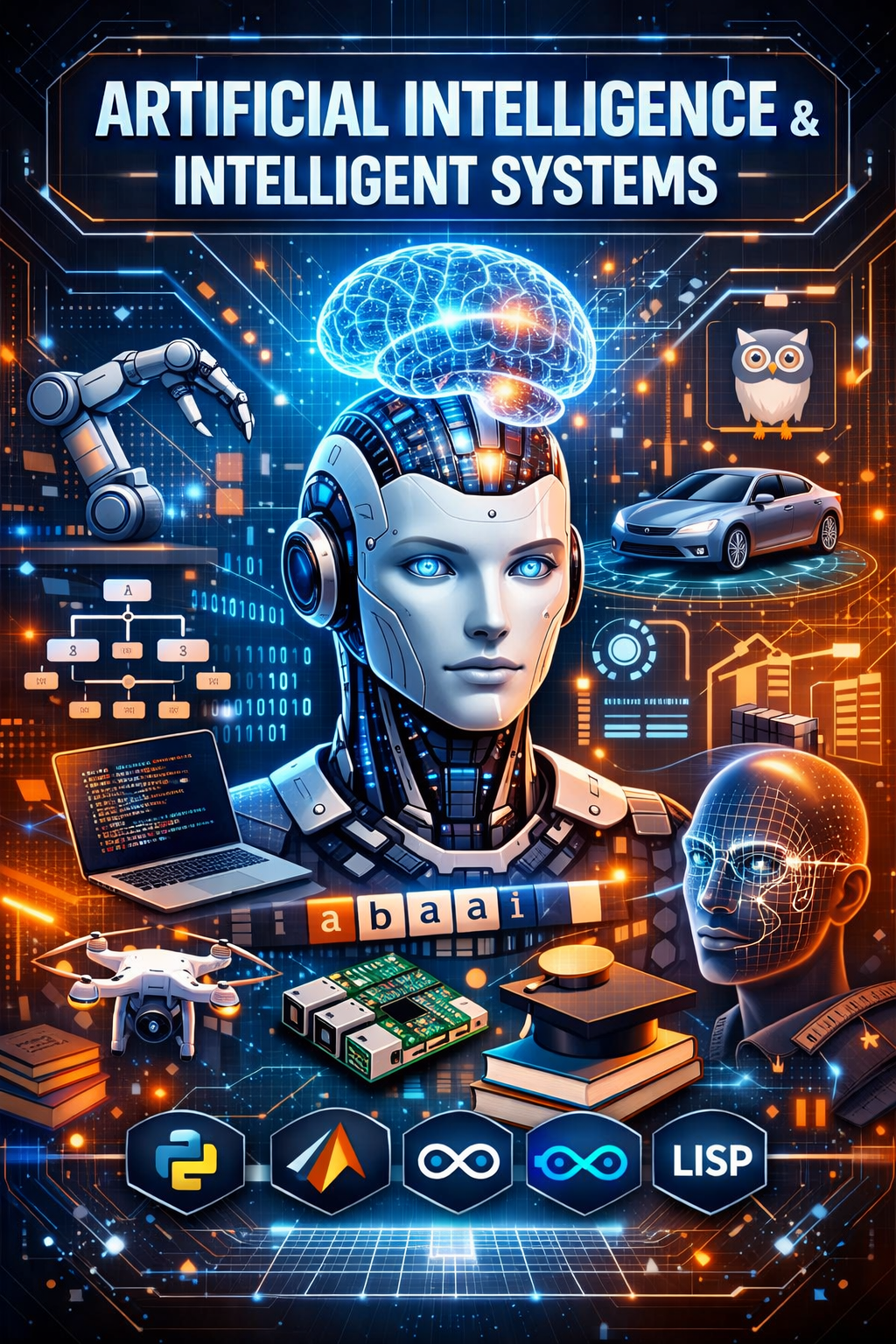
This course introduces the principles and techniques of Artificial Intelligence (AI), covering problem solving, knowledge representation, search algorithms, machine learning, and intelligent reasoning. Students explore formal computational models, including automata, formal languages, grammars, and Turing machines, alongside AI methods such as decision trees, Bayesian learning, and symbolic learning. The course examines applications of AI in natural language processing, computer vision, robotics, expert systems, autonomous vehicles, facial recognition, and other domains. Practical laboratory sessions provide hands-on experience with AI tools and platforms including Python, MATLAB, Arduino, Raspberry Pi, Prolog, and LISP. Students apply AI techniques to develop intelligent solutions and construct a small expert system.
- Teacher: EMMANUEL BUGINGO